Models process content in small pieces called tokens. A text token may be a word, part of a word, or punctuation. Different models split the same sentence differently, so there is no exact universal conversion from words to tokens.
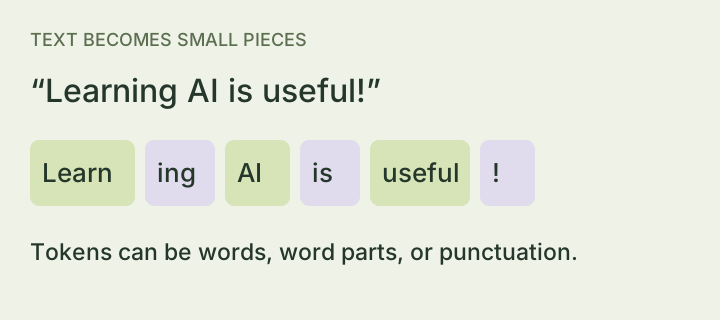
How does AI turn my words into tokens?
A tokenizer is the preparation step between your sentence and the model. Think of a checkout scanner: it turns each item into a number the store system can use. A tokenizer splits text into pieces and assigns each piece a number, called a token ID. The model works with those IDs, then the app turns its output IDs back into readable text. The split depends on the model's tokenizer, so the same sentence can take different numbers of tokens in different apps.
Think of context as a working desk
The context window is the space available for the current request. Instructions, conversation history, attached material, tool results, and the answer can all use that space. An app may shorten or summarize older messages when the conversation gets too long.
What does 128K mean?
It usually means a limit of roughly 128,000 tokens, rather than 128,000 words. The exact token count and separate output limit depend on the model. A model supporting that much input does not guarantee your computer has enough memory to use it locally.
More room does not mean perfect recall
A long document can fit while the answer still misses a detail. Make your question specific, label the relevant material, and check the passage that supports the answer.
Try this
Paste two short, clearly labeled notes and ask for one difference between them, with a quotation from each. This is easier to verify than a request to “tell me everything important.”
Start with the material your question needs. Increase context when you need more room, then check memory use and waiting time.
Sources & further reading
These references go into more detail; some are written for developers.