For a while, I could get an agent to start an ambitious project, but I had trouble getting it to stay with the hard parts. It would build something, declare it done, and leave me with a result that looked promising in a screenshot but needed much more work when I actually used it.
I was reading about ideas people called loop engineering and graph engineering: ways to organize longer AI work instead of asking for one answer. Then, while I was experimenting with Claude Fable, I came across Matt Shumer’s Gauntlet Loop.
The demo I didn’t quite believe
Shumer had shown a Call of Duty-style shooter running in a browser. My first reaction was disbelief. AI-generated video had become convincing enough that a clip alone did not prove there was a playable game behind it. Then he published the code and prompt. I tried the approach myself, more than once. That is when it became interesting to me.
The phrase “one prompt” can make this sound like a one-shot trick. It wasn’t. His original project used Opus 5, before Fable came out, and ran for hours with subagents: smaller agents given separate jobs. The prompt asked them to compare the real result with a high bar, criticize it, and keep working. That distinction changed how I thought about building with agents.
Comparable games, concept art, mock screenshots, or motion references.
Let agents handle pieces that can be built and inspected separately.
Separate critics score visuals, effects, gameplay, and bugs against the reference.
My own playtest exposes what a score or screenshot missed.
What I’ve learned by trying it
1Give it a reference it can actually inspect
If I ask for something familiar, like a Call of Duty-style shooter, the agent can find examples. For an original game, I usually make the reference first: concept art, character sheets, backgrounds, sometimes a short video, and mock in-game screenshots with a proposed interface. I often use Claude to help generate those before the game exists.
Then I give those materials to the larger build prompt. The images are not proof that the game works; they are a target for what I want to see. Better references have given me better first results than a vague instruction to “make it look polished.”
2Make criticism a separate job
I ask for subagents that act as visual, visual-effects, gameplay, and testing critics. They inspect the actual build, set criteria, score what they find, and name the biggest problem for the next pass. I want them to be demanding, not reassuring.
The numbers are useful for keeping the work moving, but I don’t treat an agent’s score as objective truth. A critic can miss a bug or reward surface polish. For an early prototype, the feedback is often good enough to guide another iteration. It does not replace my own playtest.
3Let the lead agent use subagents
My main prompt explicitly invites subagents, so one lead agent can coordinate work while others focus on particular parts. In my experience, Claude Code makes this easier to follow because I can see which subagents are working or idle. Codex has subagents too, but in my own runs it has tended to stop sooner and produce weaker visual game results. That is a report on my experiments, not a general ranking of the tools.
4Loop, then change the brief after playing
I tell the agents to improve the scores across rounds instead of stopping after the first plausible build. Still, a score target is not the finish line. When I play the first result, I usually find something the agents did not weigh enough: the game may look good but feel too easy, too chaotic, or simply not fun yet. I adjust the criteria and run more loops.
What I’m building with it
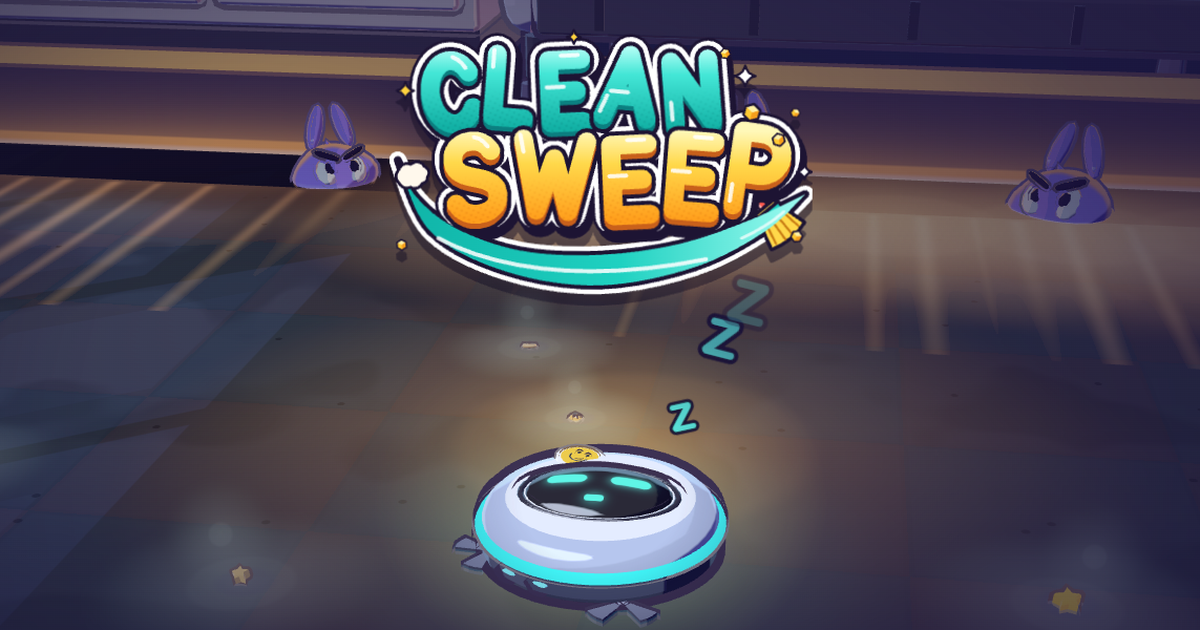
Clean Sweep is the clearest public example so far: a small survival game about a robot vacuum fighting dust monsters. I also like where Purrbarage is heading. Both benefited from starting with references and pushing through repeated critique. Neither is “finished” in the sense that matters most to me. Fun, balance, and feel still need human attention.
The tools I’m using now
Stronger reasoning settings have worked better for my long, multi-part runs. Fable got me excited about what was possible, but it has been too expensive for me to use for every pass. Lately I start a project with Opus 5.5 at high or ultra effort—settings that give it more room to reason—then try Astra or Sol once the first working version is in place. I’m also testing Sonnet 5.5. That is my current mix, not a prescription: I still compare the actual result and the cost of each run.
Goal: Build a playable version of this game, using these references as the quality bar.
Team: Split the work into parts. Use separate critics for visuals, effects, gameplay, and testing. Have them inspect the build, not a description of it.
Loop: After each pass, score the criteria, fix the largest gap, and run it again. Show me what changed and what still falls short. I will play it and revise the bar.
I’m still experimenting. The exciting part is that I can now explore a game idea far enough to play it, not just picture it. The humbling part is that a long agent run can produce an impressive prototype without producing a good game. I want to keep closing that gap.